Monday, December 16, 2024

Catching up with Lasse Viren

Catching up with Lasse Viren in Myrskyla, Finland

By Pablo Vigil


Myrskyla, or place of storms; is a beautiful, small Finnish village, with scattered patches of rolling woods, roads, trails, barley, rye, wheat fields, some rock outcrops. Verdant, pastoral beauty is everywhere, along with many species of mushrooms and edible berries. A beautiful white, wooden church is centrally located, with a small cemetery and a big, beautiful lake behind it. Small farms and some small family businesses are there: Viren Trucking, Safu Fish Company, as well as, a famous red granite quarry. Typical fauna includes moose, rabbits, deer, small birds…and on rare occasions, a bear/karhu, or perhaps a wolf/susi.  
  In essence, a setting analogous to what the American poet, Robert Frost, or the Finnish writer, Aleksis Kivi captured in their writings. Aleksis Kivi’s famous book, Seven Brothers, could well have taken place in Myrskyla.

Old, beautiful church in central Myrskyla.
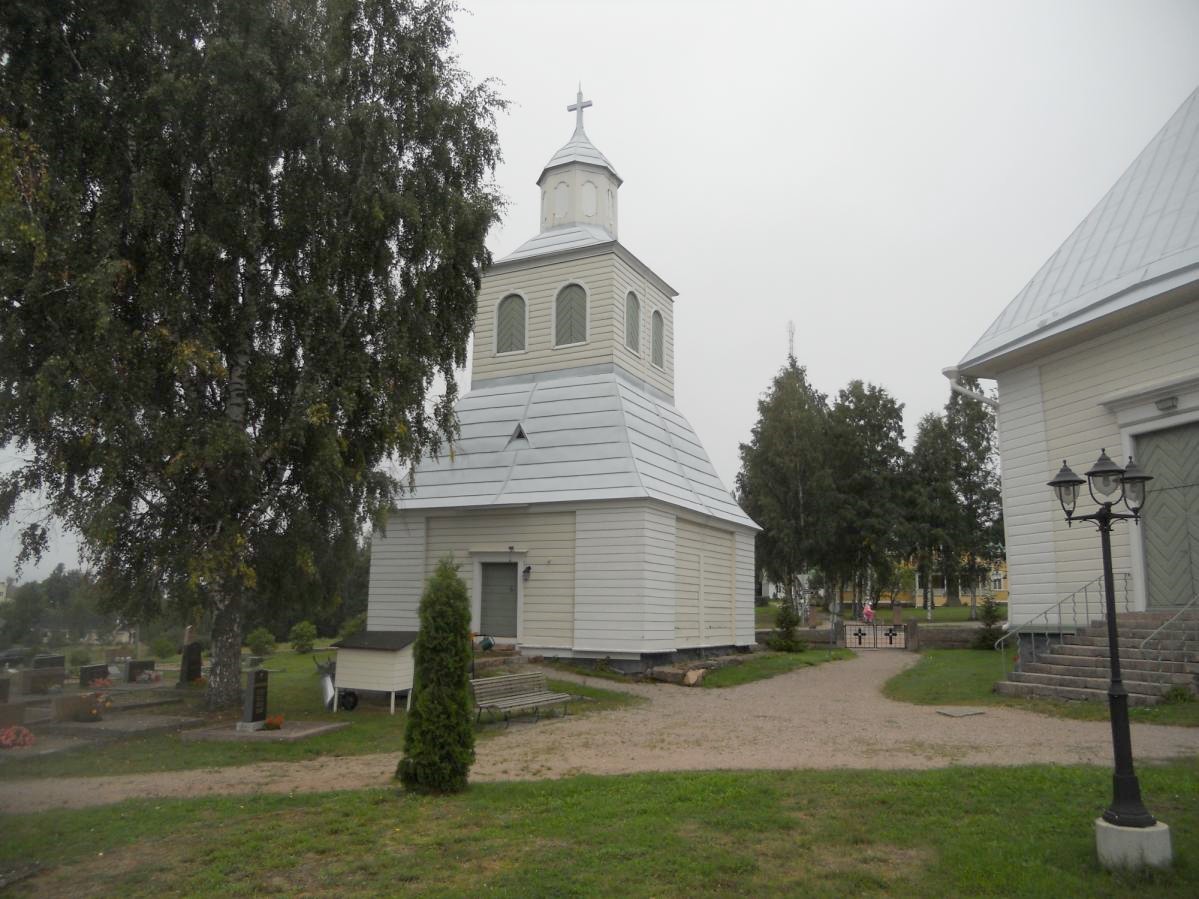


On August 25, 2011, I had the grand honor of visiting Myrskyla for the first time. This small village is approximately 1 hour northeast of Helsinki, capital of Finland, and is home to about 2,000 inhabitants. This summer also happened to be Myrskyla’s 375th anniversary.
 Vicariously, I had been to Myrskyla several times since first reading and hearing about it after the 1972 summer Olympics in Munich, Germany. Since then, I no longer thought of Myrskyla, as a place of storms, but rather, Myrskyla, the perfect storm: Lasse Viren!

 This serendipitous, chance in a life time meeting, was due to an old Finnish running friend, Henrik Sandstrom, former mayor of his municipality, Siuntio, and former international runner. For the past years Henrik has worked as managing director of a recreation area organization in the Helsinki region.

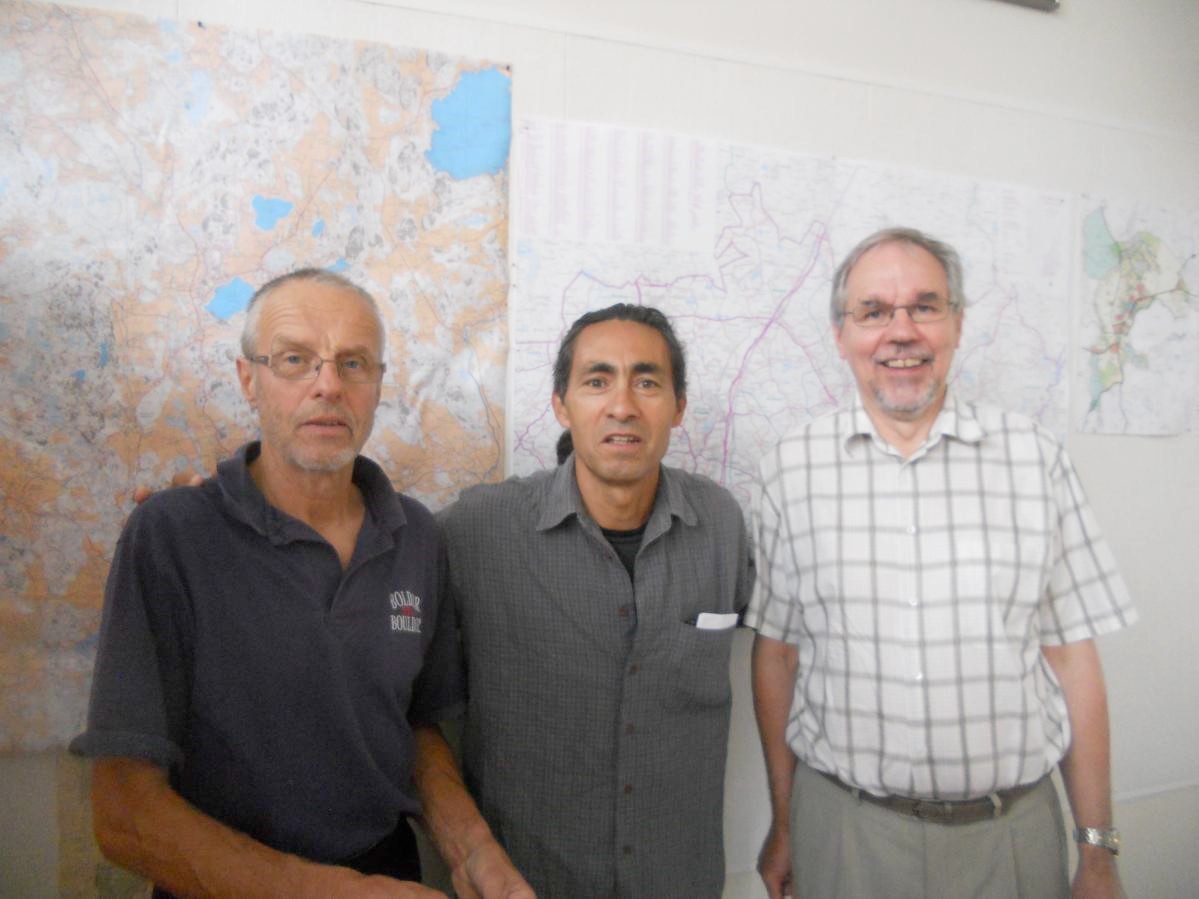
 The purpose of the visit was a business meeting with 2 special people. The first was the mayor of Myrskyla, Jouko Asuja, a tall, slim, kind man with a warm smile, bushy eyebrows, and glasses. He also has the physique of a long distance runner, but attributes it all to genetics. The 2nd was Myrskyla’s “favorite son”: Lasse  Viren, 4 time Olympic gold medalist.  His Tour de Force: 5K and 10K gold in Munich in 1972, and again in Montreal in 1976…Surreal!!!


Left to right: Lasse Viren, Pablo Vigil, Mayor Asuja

The main topic on the agenda was to discuss the possibility of collaboration between Myrskyla and the recreation area organization.

 
The meeting was to take place in the mayor’s office around noon, but Lasse was running late, no pun intended.

 I admit, I was nervous meeting Lasse after having first met him back in 1977 in Boulder, Colorado.   At that time, I trained with Olympian Frank Shorter, winner of the gold and silver in the marathon at those same summer Olympics in Munich and Montreal.

 Boulder, at the time, was a bubbling synergy of running talent, and continues to the present. Other Olympians, international runners, and national runners lived and trained there; for example: Garry Bjorklund, Mike Slack, Ric Rojas, John Gregorio, Mike Peterson, Guy Arbogast, Mary Decker, John Cossick, Michael Sandrock, Mark Johnson, Dick Quax, Bruce Gomez, Mike Ruffato, Mark Weeks, Skip and Ruthie Hamilton, Steve and Sheryl Flanagan, Steve Floto…ad infinitum.  Oregon’s Steve Prefontaine also made several guest appearances, along with Bill Bowerman, Kenny Moore and Bill Dellinger.

 Regarding Lasse’s visit to Boulder, Colorado in 1977: Finnish long distance runners in Colorado have a deeply rooted tradition, going back to the 1960s. The first migration of Finnish running stars arrived in Alamosa, Colorado in 1967 to run for Adams State College, under the coaching guidance of Dr. Joe I. Vigil/Chef des Chefs/Coach of Coaches.

These early runners included Juha Vaatainen and 2 other Finns. Years later, the Finnish migration would continue; for example: Martti Vainio, Jurgen Salo, Sinikka Keskitalo, Hakan Spik, Jari Nurmista, Tuija Toivonen, Arto Bryggare, Ari Paunonen, Harri Hanninen, Henrik Sandstrom, Tommy Ekblom, Sari Essayah, Valentin Konenen. Recently, Lasse Viren’s son also trained in Alamosa.

 Historically, Finnish runners have been big proponents of high altitude/high mileage training. Alamosa’s 7,543 feet/2,299 meters, infinite sunny days, dirt roads, great facilities, and great support by the community and Adams State College, have attracted Finnish runners for years. Equally, countless of other runners from all over the world and the USA have trickled to Alamosa.

  Runners such as Gelindo Bordin and Stefano Baldini, both Olympic marathon winners, as well as Buddy Edelen, Juma Ikangaa, Laura Fogli, Jeff Turningheart, Greg Meyer, Chuck Smead, Jim Ryan, John Esquibel, Tony Niemczak, Rick Roybal, Pat Porter, Deena Drossin‐Kastor, myself included, have trained here. Alamosa, Colorado has really been an international/national revolving door of phenomenal running and athletic talent…and continues to the present.

 Meanwhile, the minutes ticked away in Mayor Asuja’s office as we waited for Lasse. Suddenly, the silence was shattered by a loud noise coming from what sounded like a large vehicle just outside the window. Lasse had finally arrived, having driven a large cargo truck, the kind used to haul really heavy rocks, lumber, maybe even elephants. Minutes later there was a soft knock at the door and in walked Lasse. I introduced myself and told him about first meeting him in Boulder, Colorado in 1977.


Lasse and his prized cargo truck.

The meeting started and before long, the only thing I could focus on was how beautiful and soft Finnish sounded as opposed to other languages I was familiar with. During most of the 20 minute meeting, I sat politely, as quiet as a mouse, not knowing, nor understanding a single Finnish word.

Obviously,
no Finnish bad words were spoken, since I would have definitely recognized them. After the meeting, I humbly confessed to Lasse and Mayor Asuja that I neither spoke nor understood Finnish, with the exception of 5 popular bad words. After saying this, it suddenly occurred to me that they might ask me to elaborate on the 5 Finnish bad words and to ask how I had come to learn them.

  
Luckily, they didn’t ask, but out of the corner of my eye I noticed that my friend, Henrik, had turned beet red and looked embarrassed. He was one of the culprits for my bad Finnish vocabulary!! After confessing my ignorance of the Finnish language, Lasse quickly pacified me by looking at me with a twinkle in his eyes and a half smile saying, Finnish is very easy, even the very small children speak it!” I admit I did feel better after this, especially since this comforting comment came from Lasse Viren himself.

 After the meeting, we walked from the mayor’s office to a local restaurant to eat lunch. As we walked along, I kept thinking of what an amazing and surreal experience this was, how blessed I was to be walking in Myrskyla with great company and Lasse Viren, and just across the road was a statue of him.


*“Sisu” allegory, Myrskyla, Finland


The day had started off cloudy and overcast and now the sun was shining brightly on Myrskyla.

 While walking to the restaurant, during our lunch, and while walking back from our lunch, I noticed that not a single person took a second look at Lasse, or even really acknowledged him. I seemed to be more of a curiosity than Lasse.  This incident seemed very surprising to me, maybe even odd.

 *Sisu is a Finnish term analogous to “guts”, bravado, perseverance, tenacity, “will to win”, etc…in essence, the “Finnish spirit”.

 The Finnish lunch turned out to be a typical one: great salad with beets, lettuce, choice of dressings, real mashed potatoes, a thick gravy/broth with big chunks of real chicken and cooked vegetables, choice of rye,white, wheat bread, real butter. Really a wholesome, nutritious meal, typical of Finnish cuisine! Lasse also had extra butter and two glasses of milk. I drank some kind of burgundy‐colored, semi‐bitter, berry juice, but tasty. During our lunch we talked about different topics, but nothing really having to do with running and training.
  Better yet, we talked about our children, wild animals in the area, grandchildren, Lasse’s problems with his kitchen floor, the roof at his family’s trucking business, his phone. He spoke of his childhood in Myrskyla, driving a semi‐truck…etc. I confess, I did ask Lasse one running question: Did he currently run for fitness? He confessed that he had run maybe 5 times in the last 2 years. This was hard to believe. He looked amazingly fit: the same lean, small torso, extra long, lean legs and arms, same small, slender shoulders, long fingers, big feet. His once long flowing, sandy‐ brown hair was now very short and salt and pepper colored.
  His once Quaker‐style, sandy‐brown beard was gone, replaced by a full, salt and pepper, short beard, glasses covering his sky‐blue eyes. He wore a pair of worn white Asics training shoes, semi dress black pants, a short sleeved, navy blue, worn “Bolder Boulder 10k” shirt with a collar. In other words, despite his alleged lack of training and appearance, I’m convinced that he could still do some serious butt kicking…and I wasn’t about to challenge him!!!!


Lasse, still looking great years later!

After lunch we had coffee, which is typical of many European countries. The Finnish coffee is notoriously strong, compared to most wimpy, American coffee. Per capita, Finland consumes more coffee than any other nation in the world. Furthermore, Finnish coffee has been known to wake up the dead and kill the living…man, woman, or karhu!!!!

 We then got in Mayor Asuja’s car and started off to see a beautiful trail and area on top of a small hill just outside of town. On the way out, Lasse pointed out the house where he grew up. I asked if we could stop for a quick photo. I quickly jumped out of the car and snapped a picture, only to have an older man come after me shouting “What are you doing here?”. It turned out to be Lasse’s older brother, who also happened to be a retired policeman! Oh, great!!
  The
possibility of being thrown in jail in Myrskyla for trespassing quickly flashed through my brain. Luckily, Lasse called out the car window to his brother. I then quickly shook Lasses’ brother’s hand and took his picture. Also, next door to Lasse’s childhood home was an old, red, quaint log home, which Lasse told me was where his grandfather used to live and at one time had a berry‐juice business. Naturally, I had to have a picture of Lasse’s grandfather’s home. What a rare, prized moment! After this exciting ordeal, we zipped off to a nearby beautiful wooded area on top of a small hill with a winding, beautiful trail: Lassen polku/Lasse’s trail.
  This great trail
curves around the rim of a small hill and wooded area full of tall, slim pine trees, lots of wild mushrooms, and delicious blueberries, which Lasse and I couldn’t stop eating. I think I got the best of him by eating the most blueberries. This trail also winds around for about 3.5 kilometers over soft, sandy ground covered with mossy, forest vegetation, with some slightly rocky areas. All in all, Lassen polku is the kind of trail that most runners and hikers drool over, or dream about.

Along the edge of the rim is also another trail, that branches down about 80 meters over 800 meters in length. Lasse trained here countless times, so he knew this area like a wild karhu. On another side of the trail rim beautiful cliffs appeared.  Meanwhile, the sun shone like wild honey as we walked along stopping sporadically to eat wild blueberries. Along the way, Lasse also pointed out vestiges of an old, 300 meter track, now overgrown with forest vegetation and once used by Finnish soldiers during WWII to maintain fitness.


Lasse at Lassen polku/Lasse’s Trail…still looking like a “lean and mean running machine”.

Finland, fitness/running, are synonymous and nothing new. Per capita, Finland has produced some of the greatest distance runners ever: Wille Ritola, Paavo Nurmi, Juha Vaatainen, Martii Vainio, Hannes Kolehmainen, Pekka Vasala, Tapio Kantanen, Kaarlo Maaninka, are just a few.

As we continued to walk along, Lasse, Mayor Asuja and Henrik stopped periodically to view a detailed forest map of the area. Lasse also told us another interesting story regarding a small plaque and monument in one end of the forest. The gist of the plaque read: This memorial is in gratitude of all the Finnish women and their generous contributions during WWII. During WWII, Finnish women had not only worked as nurses, cooks but also as sentries.


Left to right: Mayor Asuja, Lasse, Henrik Sandstrom at Lassen polku.

While at Lassen polku, I asked Lasse if he had encountered any wild life during his training runs in the woods and trails in the area. I was imagining and expecting great stories of wild bears, or wolves, or the possiblility of Lasse fighting off a bear/wolf, then sprinting off to safety. What crazy thoughts, but I felt compelled to asked Lasse these stupid questions. Lasse  simply answered that he has only seen bears in zoos. What??? And what about a wolf/susi??? He replied, I have never seen one and I hope I never see one!!!! So much for my stupid questions and imagination. I got what I deserved, albeit, disappointing!!

After this, we drove back to Mayor Asuja’s office where he presented both Henrik and me with a beautiful book about Myrskyla. This special book contains copies of old black and white photos taken in the 19th  and 20th century, along with recent ones in color. Both Mayor Asuja and Lasse signed our books, plus Lasse autographed several postcards of himself wearing his 4 Olympic gold medals. I then followed Lasse to his monster cargo truck and asked for one last photo. The last photo taken, I thanked him for his generous time and hospitality and most of all, his inspiration.


One thing for sure: next time I visit Myrskyla, I will definitely insist on Lasse showing me how to drive his cargo truck, after all, he assured me that driving a big truck was easier than driving a smaller vehicle. Again, Lasse seems to have a way of making many things look and sound easy…maybe even winning 4 Olympic gold medals??? Furthermore, I think Mayor Asuja and I need to have a meeting ASAP concerning my idea for a name change for Myrskyla: I was thinking of changing Myrskyla to MyrskyLasse….It is only a simple change of 3 extra letters!!!

PS: Special kiitos/thanks to Henrik Sandstrom, Mayor Jouka Asuja, and Lasse Viren for my 1st visit to Myrskyla…home of the perfect storm: Lasse Viren!

Kiitos! Kiitos! Hyva! Hyva!...Sisu!!!!!!!


Author contemplating future “MyrskyLasse” sign change…only 3 extra letters!!!


Many, Many thanks to Author Pablo Vigil for his great article and pictures!!


Author Pablo with Lasse and US Gold Medal Winner Frank Shorter

 Lasse Viren of Finland crosses the finish line to win the gold medal in the 5000m with a time of 13:24.76 during the 1976 Summer Olympics in Montreal,


Lasse and Steve Prefontaine


Frank Shorter 1972 Olympic Gold Medalist in the Marathon


Thursday, December 5, 2024

NCAA Cross-Country Champs Use Secret Ingredient

 Runners Use Secret Ingredient to Win N.C.A.A. Race: Olive Oil

B.Y.U.’s cross-country runners went old school and coated their bodies for a cold race day.

Listen to this article · 4:46 min Learn more
A group of men in athletics clothing running a race pass through a grassy area.
B.Y.U. runners, clad in blue shorts and white tanks, won the men’s and women’s team titles at the N.C.A.A. championships on Saturday.Credit...Nate Edwards/BYU Photo


New York Times

Brigham Young University was ready for the N.C.A.A. Division I cross-country championships on Saturday. It had strong men’s and women’s teams that had each won the Big 12 championship.

But there was a challenge facing B.Y.U. and all the other entrants. The day of the race in Verona, Wis., was going to be pretty cold, with a temperature in the mid-to-high 30s. That would make things less than pleasant for runners in shorts and singlets.

B.Y.U. had a plan both innovative and ancient: having the runners slather their bodies in olive oil, in what the men’s coach, Ed Eyestone, called “an old-school running trick.”

“We’ve done it every year if it’s cold,” said the women’s coach, Diljeet Taylor. “It’s a trick. You don’t see a lot of people doing it.”

“I used it as an athlete many times,” Eyestone said. “I won the N.C.A.A title 40 years ago wearing some brown gardening gloves and bare arms and shorts. That was a much worse day. I used olive oil.”

B.Y.U.’s trick was very likely theirs alone at this year’s championships. “I would guess we were the only ones using it,” Eyestone said. “I don’t see it as much anymore.”

Image
Members of the B.Y.U. women’s cross-country team, in blue singlets and shorts, embrace in celebration after a race.
“We’ve done it every year if its cold,” the B.Y.U. women’s coach, Diljeet Taylor, said of the application of a layer of olive oil before the race starts. “It’s a trick. You don’t see a lot of people doing it.”Credit...Owen Ziliak/Wisconsin State Journal, via Associated Press

B.Y.U. coaches applied the oil to the runners’ legs, backs and arms five minutes before the start, just as the sweats were coming off, while offering last-minute words of encouragement.

So why olive oil? “It keeps the legs warm,” Taylor said. In a race where runners wear shorts, she added, “your legs are going to be exposed.”

“It insulates your skin and really protects from losing heat and also offers wind protection,” she said

But before you go buy a bottle, know that it may not be perfect for all race distances and weather conditions. Eyestone recommends the olive oil coating for races that are less than a half-hour long. (The fastest runners finished the men’s 10K race in a little over 28 and a half minutes. The winner of the women’s 6K race crossed the finish line in a little over 19 minutes.) For marathons, wearing more layers is a smarter idea, he said.

Eyestone also thinks that olive oil works better in moderately cold conditions, as in Wisconsin on Saturday. “Had it been zero degrees, the guys would have had undershirts and layers,” he said. “For skiing, I’d never do this.”

But, he added, “for a moderately cold day, less than 30 minutes, it’s an interesting thing to say, ‘We’re going old school today.’ It gives them a little extra layer of insulation, and maybe a secret weapon.”

Even today, the method is not unheard-of, particularly in the Midwest, where it gets awfully cold by November, when cross-country season typically ends.

More common is Vaseline, and swimmers of the English Channel — like Gertrude Ederle in 1926 — were said to have used lard. Eyestone cautioned that Vaseline is a lot harder to get off after a race than olive oil.

A high temperature in the 30s is nothing to hardy cross-country runners, who often find themselves in far worse conditions. “When I won in 1984, it was worse,” Eyestone said. “It had snowed. Many were wearing hats and gloves, undershirts and tights.”

The B.Y.U. men also won the national title in 2019, also bathed in olive oil. “It was raining, very cold, miserable, worse conditions,” Eyestone said. “We’ve had a couple of years when the wind chill was negative: Iowa, Indiana; biting, biting cold.”

Eyestone said that once when he was running at the U.S. winter cross-country nationals in Missoula, Mont., his mustache froze.

As for the 2024 race, the B.Y.U. women followed Taylor’s strategy: “Get out with urgency, in the middle be patient, and in final third, urgency again.”

Image
A man in a blue windbreaker and baseball cap celebrates with one of the runners from B.Y.U. after the race.
B.Y.U.’s trick was very likely theirs alone at this year’s championship, said the men’s coach, Ed Eyestone.Credit...Nate Edwards/BYU Photo

“We got out really well,” she said, “then went back a little. Most coaches might panic; for me, that brought comfort.” The women won by 17 points over West Virginia.

B.Y.U.’s men took a different tack than usual, though the olive oil probably wasn’t the reason. “Typically, we’re going to come from behind,” Eyestone said. “But our guys got out very well.”

Iowa State made up ground, and the lead started to shrink. At the finish, B.Y.U. hung on to win by 13 points.

It was the first men’s and women’s sweep since the University of Colorado in 2004.

As unusual as the olive oil method may seem, some of the very first athletes in recorded history swore by it.

The ancient Greeks often competed in a coating of olive oil at the Olympics, though for different reasons than B.Y.U.’s team, given the warmer clime of the Mediterranean. The oil served as sunscreen of a sort, and the athletes also believed it would bring them good luck and strength.

So is there a downside at all to olive-oil-anointed running? Eyestone said, “You come across the line smelling like a pizza.”

Victor Mather, who has been a reporter and editor at The Times for 25 years, covers sports and breaking news. More about Victor Mather

A version of this article appears in print on Nov. 30, 2024, Section B, Page 8 of the New York edition with the headline: Brigham Young Runners’ Secret Ingredient to Win N.C.A.A. Titles: Olive OilOrder Reprints | Today’s Paper | Subscribe