From Running Research News: The best type of training to increase your fitness:
THE MERITS OF TEMPO VS. INTERVAL RUNNING
Which will have a bigger impact on your performances?
As you plan your workouts, you probably wonder from time to time about whether tempo sessions or interval workouts have a larger effect on your overall fitness. Tempo sessions have been a mainstay of running training for over 40 years, and they are thought to have a positive influence on lactate-threshold running speed, a key predictor of performance. Interval training has been around for even longer, and many experts link interval work with upgrades in speed, running economy, and aerobic capacity, which are all decent indicators of performance potential.
To examine the relative value of interval and tempo training, New Zealand Olympic great Peter Snell and his colleagues at the University of Texas Southwestern Human Performance Center asked some well-conditioned runners to focus on either tempo running or interval training for a period of 10 weeks (1). If the name Peter Snell rings a bell, the researcher from Texas Southwestern is the same Peter Snell who won a total of three gold medals at the 1960 and 1964 Olympics and also captured two gold medallions at the Commonwealth Games in 1962. Snell's world-record performance of 1.44.3 for 800 meters, accomplished in February, 1962, remains the New-Zealand national record to this day. After his running career ended, Snell earned a Ph. D. in exercise physiology and has been a researcher at Texas Southwestern since 1981.
In Peter's research, one group of runners carried out tempo runs twice a week (the rest of their running was moderate-paced effort). These tempo workouts involved running for 29 minutes at a running speed which roughly corresponded with lactate-threshold velocity - the pace above which blood-lactate levels begin to increase dramatically. The average intensity during these sessions was about 70 to 80 percent of maximal aerobic capacity (VO2max).
Runners in a second group carried out no tempo running at all but instead conducted two interval sessions per week. During these interval workouts, the runners cavorted through 200-meter intervals in 33 to 38 seconds and performed 400-meter intervals in 75 to 80 seconds, completing a total of about three miles of interval running per workout. Exercise intensity during this interval running averaged 90 to 100 percent of VO2max.
After 10 weeks, the runners from both groups ran 800-meter and 10-K races. In these competitions, the interval-trained runners fared far better than the tempo-tutored harriers. For example, the interval-based runners improved 800-meter time by an average of 11.2 seconds and bettered previous 10-K times by 2.1 minutes.
Meanwhile, the tempo-training devotees shaved just 6.6 seconds from their 800-meter times and upgraded 10-K running by only 1.1 minute, roughly half the improvement achieved by the interval-trained competitors. VO2max soared by 12 percent for the interval runners but nudged upward by only 4 percent for the tempo-trained runners.
These results were observed even though the tempo-trained individuals engaged in a far-greater amount of quality work over the 10-week period. Specifically, the tempo runners completed 58 minutes per week of tempo training, while the interval individuals spent just 31 minutes per week conducting fast interval effort. This led to a 270-minute edge in quality training for the tempo group over the 10-week period.
Despite this apparent disadvantage, the interval-trained runners gained considerably more physiological and competitive fitness. A key lesson to be learned here is that intensity is always the most-potent producer of fitness; it is a much-stronger stimulus for improvement than training volume and workout frequency. When you conduct your intervals at 90 to 100 percent of VO2max (and at higher intensities, too), the amount of fitness gained per minute will always be greater, compared with the running capacity accrued at lower intensities. As you can see from Snell's research, each minute of high-quality work can sometimes produce twice as much gain in fitness as double the amount of lower-quality exertion.
Incidentally, recent research has discredited tempo training as a powerful booster of lactate-threshold speed, the adaptation with which it has been traditionally linked. The problem is that tempo training, carried out at close to lactate-threshold velocity, by definition produces very little increase in blood-lactate concentrations and thus does a poor job of stimulating muscle cells to get better at clearing lactate from the blood. Blood-lactate removal by the muscles is a key component of improving lactate-threshold speed.
Note, too, that interval training is superior to tempo running when it comes to matching training paces with goal race speeds (unless you are planning to run only 15Ks and half-marathons). This is obviously a good thing from the standpoints of enhancing goal-speed running economy and mental confidence. As Snell pointed out in a telephone interview with Running Research News, "Perhaps the best way to train is to spend the maximum-possible amount of time running at a pace which is closely related to the demands (or pace) of the race you're shooting for, without getting overtrained."
So what kinds of intervals would work well for you? 1600s at 5-K pace, 800s at four seconds per 400 meters faster than 5-K pace, and 400s at eight seconds per 400 meters faster than 5-K speed would all be very productive. During such interval sessions, each jog recovery can last about as long as the duration of the preceding work interval. Especially for the 1600-meter intervals, it is smart to pare down the time-lengths of these recoveries over time, as you get fitter.
Courtesy of Owen Anderson. Owen Anderson's new site:http://www.educatedrunner.com
Thursday, July 17, 2008


Wednesday, July 16, 2008
Gloucester Catholic Cross Country Team Incorporates Yoga
The Gloucester Catholic Cross Country team has been incorporating Yoga  stretches into their workouts since 1980. Like running, yoga can offer life long benefits. Any runner that wants to increase flexibility, improve blood flow to muscles, reduce tension and just plain feel better can incorporate yoga as part of their stretching routine. For the past 10 years, the team has worked to increase their flexibility with some of the leading yoga experts in South Jersey including the Lourdes Wellness Center (including David Egan) and the Kennedy Health Center in Voorhees as a regular and enjoyable part of practice.


 stretches into their workouts since 1980. Like running, yoga can offer life long benefits. Any runner that wants to increase flexibility, improve blood flow to muscles, reduce tension and just plain feel better can incorporate yoga as part of their stretching routine. For the past 10 years, the team has worked to increase their flexibility with some of the leading yoga experts in South Jersey including the Lourdes Wellness Center (including David Egan) and the Kennedy Health Center in Voorhees as a regular and enjoyable part of practice.

Above and below, the 2007 cross country team stretches with Laura Bonanni of Fitness Yoga Studios http://www.myfitnessyoga.com/ after practice.
Prevention Magazine frequently publishes articles on Yoga
http://www.prevention.com/cda/article/slim-down-with-yoga/a018d786593b4110VgnVCM10000013281eac____/news.voices/in.the.magazine/october.2007.issue

Tuesday, July 15, 2008
Mel Sheppard- A Champion to Remember

A century ago, South Jersey's Mel Sheppard won the first of his 4 Olympic Gold Medals
By Phil Anastasia, Inquirer Staff Writer
By Phil Anastasia, Inquirer Staff Writer
One of America's greatest Olympic champions was a South Jersey native who ran his first race as a Philadelphia schoolboy.
He was a fierce competitor whose humble background and dogged determination made him a personal favorite of President Theodore Roosevelt.
He was a former street tough - a self-styled member of the "Grays Ferry Roaders" gang in South Philadelphia around the turn of the 20th century - who ran so fast and so well that U.S. middle-distance stars have been chasing his accomplishments for a century.
And they haven't caught him yet.
One hundred years ago today, Mel Sheppard won the first of his three gold medals at the Olympic Games in London. A century later, Sheppard remains the last American to win a gold medal in the 1,500 meters.
Sheppard also won the 800 meters and anchored the U.S. sprint medley relay team to a victory in those Games. At the 1912 Olympics in Stockholm, he won a gold medal in the 4x400 relay and a silver medal in the 800.
Four Olympic gold medals, three in world-record time. An Olympic silver medal. Seven AAU national titles. World indoor records in the 600 and 1,000 yards.
All that athletic glory springing from such an unlikely background - plus an eyewitness brush with the aftermath of the sinking of the Titanic - make Sheppard one of the more compelling characters to emerge from the Philadelphia area.
But 100 years is a long time: Today, Sheppard might be the most famous athlete that most people never heard of.
"He should be our Steve Prefontaine," said longtime Haddonfield track and cross-country coach Nick Baker, referring to the late Oregon running star.
Sheppard was born in 1883 in Almonesson, a section of Deptford Township in Gloucester County. He lived there, in a twin house, for the first nine years of his life.
"What I remember most is swimming in Almonesson Lake," Sheppard wrote in his autobiography, Spiked Shoes and Cinder Paths, which was published in serial form in Sport Story magazine (newstand price: 5 cents) in 1924.
At the time, Almonesson Lake was a rural body of water popular with fishermen and young boys who would tie ropes to trees that grew near the shoreline. For most of the first half of the 20th century, Almonesson Lake was a recreation spot for boaters and swimmers, with amusement rides near the current location of Auletto's Caterers.
At age 9, Sheppard moved with his family to Clayton, and got a job "rolling jars" in a glass factory for $9 a month. His family moved to Haddonfield a few years later, then to the Grays Ferry section of Philadelphia when Sheppard was about 15.
Sheppard wrote that he had jobs "pulling tacks out of shoes" and as a messenger boy, but that he also joined the Grays Ferry Roaders, a street gang that clashed with rival gangs such as the Ramcats, Pine Streeters and Race Streeters.
Sheppard wrote that the Ramcats were his gang's "special enemies, with whom we would fight when we had nothing else to do."
Sheppard's emergence as a world-class athlete was astoundingly sudden. When he was 17, his family moved to West Philadelphia, near Fairmount Park, and he joined the Preston Athletic Club.
About the same time, he enrolled in Brown Preparatory School, in the Odd Fellows Temple at Broad and Cherry Streets. The building, erected in 1893 at a cost of $1 million, was demolished in 2007 to make way for the Convention Center expansion.
Sheppard wrote that his first race was a 100-yard dash in Washington Park in Philadelphia. He finished third.
"The longer races were more fit to my nature," Sheppard wrote.
In 1904, Sheppard won three races while representing Brown Prep at schoolboy events held in conjunction with the Olympics in St. Louis - a foreshadowing of his success four years later in London.
Sheppard qualified for the 1908 U.S. Olympic team by winning the 800 meters in the Olympic trials, which were held at Franklin Field.
He set sail for London on June 29 with about 100 other members of the U.S. team on the liner Philadelphia. He wrote that the track team trained on "a cork track on the promenade deck," and noted that javelin throwers amused themselves by tying ropes to their spears and throwing them at sharks that approached the ship.
The 1908 Games were the first to have an opening ceremony. About 2,000 athletes, representing 22 countries, competed.
There was a fierce rivalry between the American and English teams, fueled when American shot-putter Ralph Rose did not dip the U.S. flag in salute to King Edward VII. Rose's refusal became standard practice for U.S. athletes in the opening parade.
Sheppard was a surprise entrant in the 1,500 meters - he hadn't even run the event in the trials - but won his heat in 4 minutes, 5 seconds. The next day, he set a world record by winning the final in 4:03.5.
"If it was necessary to die at the finish, why, that would be perfectly satisfactory as long as I hit the tape first," Sheppard wrote. "It was the proudest moment of my life."
Sheppard won the 800 meters in 1:52.4, another world record. And he was the anchor man on the sprint medley relay team that won another gold medal.
About a month later, Sheppard and the rest of the U.S. team were invited to meet President Theodore Roosevelt at his summer home in Oyster Bay, N.Y.
"The president was particularly interested in Mel Sheppard and asked for him several times," the New York Times reported Sept. 1, 1908. "The great middle-distance runner was compelled to describe his races . . . and the president listened with great attention."
Roosevelt was particularly interested in the 1,500 meters, which he called "the greatest race I ever read about." Sheppard told the president about the event, then pulled a Moroccan leather case out his pocket and handed it to the man known as the Rough Rider.
"This is my prize for winning the event," Sheppard said of his gold medal. "I would be honored if you would keep it."
When Roosevelt refused, Sheppard said, "I have two others, and I will not miss this one."
When Roosevelt accepted, he told Sheppard, "This will be one of my most treasured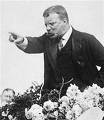 possessions."
In his autobiography, Sheppard described Roosevelt's reaction this way: "The president was like a schoolboy who won his first ribbon."
Sheppard later wrote to Roosevelt asking for help in acquiring a job as a customs inspector at the Port of Philadelphia. Roosevelt's personal secretary wrote back, and Sheppard got the position.
He later was transferred to the Port of New York, and he was on duty the night of April 18, 1912, when the RMS Carpathia arrived with the survivors from the sinking of the Titanic.
From 1906 to 1912, Sheppard was America's best middle-distance runner. He won seven AAU national titles, and barely missed another gold medal in the 800 meters at the 1912 Olympics. His time of 1:52 would have been another world record, but teammate Ted Meredith edged him at the tape and won in 1:51.9.
When his running career ended, Sheppard turned to coaching. He was a civilian athletic director at military bases during World War I. He served as a field secretary for the Playground and Recreation Association of America, traveling the country to help set up leagues and playgrounds. He was the coach of the U.S. women's track team at the 1928 Olympics in Amsterdam.
For the last 20 years of his life, Sheppard worked for Wanamaker's in New York as recreation director of the Millrose Athletic Association. He died in 1942 in Queens, N.Y., at the age of 59.
"He was kind of a rough-and-tumble individual," said Howard Schmertz, 83, who served as meet director of the Millrose Games from 1975 to 2003.
Schmertz's father directed the Millrose Games from 1934 to 1974, and was an attorney for Wanamaker's during Sheppard's time with the Millrose Athletic Association.
Looking back, Schmertz said, "In those days, everybody knew Mel Sheppard."
He was a fierce competitor whose humble background and dogged determination made him a personal favorite of President Theodore Roosevelt.
He was a former street tough - a self-styled member of the "Grays Ferry Roaders" gang in South Philadelphia around the turn of the 20th century - who ran so fast and so well that U.S. middle-distance stars have been chasing his accomplishments for a century.
And they haven't caught him yet.
One hundred years ago today, Mel Sheppard won the first of his three gold medals at the Olympic Games in London. A century later, Sheppard remains the last American to win a gold medal in the 1,500 meters.
Sheppard also won the 800 meters and anchored the U.S. sprint medley relay team to a victory in those Games. At the 1912 Olympics in Stockholm, he won a gold medal in the 4x400 relay and a silver medal in the 800.
Four Olympic gold medals, three in world-record time. An Olympic silver medal. Seven AAU national titles. World indoor records in the 600 and 1,000 yards.
All that athletic glory springing from such an unlikely background - plus an eyewitness brush with the aftermath of the sinking of the Titanic - make Sheppard one of the more compelling characters to emerge from the Philadelphia area.
But 100 years is a long time: Today, Sheppard might be the most famous athlete that most people never heard of.
"He should be our Steve Prefontaine," said longtime Haddonfield track and cross-country coach Nick Baker, referring to the late Oregon running star.
Sheppard was born in 1883 in Almonesson, a section of Deptford Township in Gloucester County. He lived there, in a twin house, for the first nine years of his life.
"What I remember most is swimming in Almonesson Lake," Sheppard wrote in his autobiography, Spiked Shoes and Cinder Paths, which was published in serial form in Sport
 Story magazine (newstand price: 5 cents) in 1924.
At the time, Almonesson Lake was a rural body of water popular with fishermen and young boys who would tie ropes to trees that grew near the shoreline. For most of the first half of the 20th century, Almonesson Lake was a recreation spot for boaters and swimmers, with amusement rides near the current location of Auletto's Caterers.
At age 9, Sheppard moved with his family to Clayton, and got a job "rolling jars" in a glass factory for $9 a month. His family moved to Haddonfield a few years later, then to the Grays Ferry section of Philadelphia when Sheppard was about 15.
Sheppard wrote that he had jobs "pulling tacks out of shoes" and as a messenger boy, but that he also joined the Grays Ferry Roaders, a street gang that clashed with rival gangs such as the Ramcats, Pine Streeters and Race Streeters.
Sheppard wrote that the Ramcats were his gang's "special enemies, with whom we would fight when we had nothing else to do."
Sheppard's emergence as a world-class athlete was astoundingly sudden. When he was 17, his family moved to West Philadelphia, near Fairmount Park, and he joined the Preston Athletic Club.
About the same time, he enrolled in Brown Preparatory School, in the Odd Fellows Temple at Broad and Cherry Streets. The building, erected in 1893 at a cost of $1 million, was demolished in 2007 to make way for the Convention Center expansion.
Sheppard wrote that his first race was a 100-yard dash in Washington Park in Philadelphia. He finished third.
"The longer races were more fit to my nature," Sheppard wrote.
In 1904, Sheppard won three races while representing Brown Prep at schoolboy events held in conjunction with the Olympics in St. Louis - a foreshadowing of his success four years later in London.
Sheppard qualified for the 1908 U.S. Olympic team by winning the 800 meters in the Olympic trials, which were held at Franklin Field.

He set sail for London on June 29 with about 100 other members of the U.S. team on the liner Philadelphia. He wrote that the track team trained on "a cork track on the promenade deck," and noted that javelin throwers amused themselves by tying ropes to their spears and throwing them at sharks that approached the ship.
The 1908 Games were the first to have an opening ceremony. About 2,000 athletes, representing 22 countries, competed.
There was a fierce rivalry between the American and English teams, fueled when American shot-putter Ralph Rose did not dip the U.S. flag in salute to King Edward VII. Rose's refusal became standard practice for U.S. athletes in the opening parade.
Sheppard was a surprise entrant in the 1,500 meters - he hadn't even run the event in the trials - but won his heat in 4 minutes, 5 seconds. The next day, he set a world record by winning the final in 4:03.5.
"If it was necessary to die at the finish, why, that would be perfectly satisfactory as long as I hit the tape first," Sheppard wrote. "It was the proudest moment of my life."
Sheppard won the 800 meters in 1:52.4, another world record. And he was the anchor man on the sprint medley relay team that won another gold medal.
About a month later, Sheppard and the rest of the U.S. team were invited to meet President Theodore Roosevelt at his summer home in Oyster Bay, N.Y.
"The president was particularly interested in Mel Sheppard and asked for him several times," the New York Times reported Sept. 1, 1908. "The great middle-distance runner was compelled to describe his races . . . and the president listened with great attention."
Roosevelt was particularly interested in the 1,500 meters, which he called "the greatest race I ever read about." Sheppard told the president about the event, then pulled a Moroccan leather case out his pocket and handed it to the man known as the Rough Rider.
"This is my prize for winning the event," Sheppard said of his gold medal. "I would be honored if you would keep it."
When Roosevelt refused, Sheppard said, "I have two others, and I will not miss this one."
When Roosevelt accepted, he told Sheppard, "This will be one of my most treasured
 possessions."
In his autobiography, Sheppard described Roosevelt's reaction this way: "The president was like a schoolboy who won his first ribbon."
Sheppard later wrote to Roosevelt asking for help in acquiring a job as a customs inspector at the Port of Philadelphia. Roosevelt's personal secretary wrote back, and Sheppard got the position.
He later was transferred to the Port of New York, and he was on duty the night of April 18, 1912, when the RMS Carpathia arrived with the survivors from the sinking of the Titanic.
From 1906 to 1912, Sheppard was America's best middle-distance runner. He won seven AAU national titles, and barely missed another gold medal in the 800 meters at the 1912 Olympics. His time of 1:52 would have been another world record, but teammate Ted Meredith edged him at the tape and won in 1:51.9.
When his running career ended, Sheppard turned to coaching. He was a civilian athletic director at military bases during World War I. He served as a field secretary for the Playground and Recreation Association of America, traveling the country to help set up leagues and playgrounds. He was the coach of the U.S. women's track team at the 1928 Olympics in Amsterdam.
For the last 20 years of his life, Sheppard worked for Wanamaker's in New York as recreation director of the Millrose Athletic Association. He died in 1942 in Queens, N.Y., at the age of 59.
"He was kind of a rough-and-tumble individual," said Howard Schmertz, 83, who served as meet director of the Millrose Games from 1975 to 2003.
Schmertz's father directed the Millrose Games from 1934 to 1974, and was an attorney for Wanamaker's during Sheppard's time with the Millrose Athletic Association.
Looking back, Schmertz said, "In those days, everybody knew Mel Sheppard."
Contact staff writer Phil Anastasia at 856-779-3223 or panastasia@phillynews.com.
Note: A yearly South Jersey cross country banquet is held every fall in Almonesson with close to a thousand in attendance. Ironically, at the banquet there is no mention or thought for the former Olympic Gold medal winner Sheppard-- a fellow distance runner who once lived only blocks away. At present there are no town memorials or monuments to Sheppard nor is there a memorial race in Shepards honor in his home town of Almonesson or Deptford NJ.
Thursday, July 3, 2008
1976 Gloucester Catholic Cross Country Team Where are they now?


The 1976 Gloucester Catholic cross country team did not have had state of the art training facilities. They didn't have a school bus-- the 9 team members traveled to meets in their coaches volkswagen van. They didn't even have a conference to call their own, but that freed the team up to travel throughout south jersey running against the best teams in the southern half of the state as they won 19 meets becoming the most successful boys cross country team in the schools history (See 1976 Cross Country Team Part 1 post). One thing the team surely had was a world class coach in Browning Ross and a strong desire to have fun and to achieve despite the obstacles. The team and the coach were a perfect fit. The desire to succeed and overcome obstacles is still evident in the lives of the team members today. The members of the "Bicentenial" 'GCHS '76 team have gone on to success in their personal and family lives and are scattered far and wide. Here is a look at what the team members are doing today:
Mike Browoleit lives in the LA area now (Reseda CA, as in Tom Petty's song:"it's a long day, living in Reseda"..). "You can see my kids (and me) at http://www.browoleitboys.blogspot.com/. I do a lot of things with my boys, ages 10 & 13 - hoops, the beach, soccer, baseball, etc.) but there isn't a week that goes by that I haven't thought of Browning Ross in some way, shape or form. My oldest son swims, the youngest plays soccer, and I'm always able to give them pointers on pacing, breathing, mentally preparation and the like, all learned from BR. And as the years have rolled by I've proudly stated that my cross country & track coach was a two-time Olympian. Not many of us get to say that!"
Alan Cipolone is currently a software developer for Alcatel-Lucent, an umpire for Brooklawn Little League, and a trustee for St. Maurice (Brooklawn) parish. He is married (Cathy) with three children, with the oldest (Andrew) is a freshman at GCHS. "I recall the times that Browning brought us up to the state meet in Holmdel in his Volkswagen bus, and the laughs we had on the way up. If you lifted up the carpet in his bus, there was a hole where you could see the road moving underneath! That was nice of Browning to give us state-meet exposure. The memories of that are even sweeter because, for 24 years, I worked just a mile from Holmdel park at a large Lucent facility, giving me the opportunity to re-visit the park and those great moments of the past."
Mike Browoleit lives in the LA area now (Reseda CA, as in Tom Petty's song:"it's a long day, living in Reseda"..). "You can see my kids (and me) at http://www.browoleitboys.blogspot.com/. I do a lot of things with my boys, ages 10 & 13 - hoops, the beach, soccer, baseball, etc.) but
 there isn't a week that goes by that I haven't thought of Browning Ross in some way, shape or form. My oldest son swims, the youngest plays soccer, and I'm always able to give them pointers on pacing, breathing, mentally preparation and the like, all learned from BR. And as the years have rolled by I've proudly stated that my cross country & track coach was a two-time Olympian. Not many of us get to say that!"
Alan Cipolone is currently a software developer for Alcatel-Lucent, an umpire for Brooklawn Little League, and a trustee for St. Maurice (Brooklawn) parish. He is married (Cathy) with three children, with the oldest (Andrew) is a freshman at GCHS. "I recall the times that Browning brought us up to the state meet in Holmdel in his Volkswagen bus, and the laughs we had on the way up. If you lifted up the carpet in his bus, there was a hole where you could see the road moving underneath! That was nice of Browning to give us state-meet exposure. The memories of that are even sweeter because, for 24 years, I worked just a mile from Holmdel park at a large Lucent facility, giving me the opportunity to re-visit the park and those great moments of the past."
Joe Gambogi- "I live in Leesburg, Va with my wife (Cindy) and our two kids (Matt-14 and Bridget-12). I work at the U.S. Geological Survey as a Mineral Commodity Specialist. My illustrious running career came to a screeching halt after high school, but in my 20ʼs and 30ʼs, I ran 10ks, biathlons, and triathlons. I even managed to finish a couple marathons (always finishing firmly in the middle of the pack). I was born with a bad hip. In September 2006, I had a total hip replacement. The surgery went well and last summer my wife, son, and I entered as a relay team in the NJ Sprint Triathlon. My son, Matthew, is now running for the NOVA Athletic Club and will be running high school cross country next fall.I really enjoyed running with the  team in high school. I don't remember lots of details, but I do remember we always had fun. Browning Ross was a great guy. I always remember his advice at the beginning of a race: "Go out fast and pick up the pace." One story I do remember is one that Mr. Ross loved to retell. When I was a freshman, I hurt my foot during XC practice. So I went to Mr. Ross and asked him what I should do for it. His reply was "Just rub peanut butter on it. You'll feel better". After running on it for a few weeks, I went for an x-ray and discovered I had a broken small bone in my foot. When I showed up at practice in a cast, Mr. Ross told me I just did not use enough peanut butter and gave me one of his dry "hee hee hee" laughs. I always though it was pretty funny."
 team in high school. I don't remember lots of details, but I do remember we always had fun. Browning Ross was a great guy. I always remember his advice at the beginning of a race: "Go out fast and pick up the pace." One story I do remember is one that Mr. Ross loved to retell. When I was a freshman, I hurt my foot during XC practice. So I went to Mr. Ross and asked him what I should do for it. His reply was "Just rub peanut butter on it. You'll feel better". After running on it for a few weeks, I went for an x-ray and discovered I had a broken small bone in my foot. When I showed up at practice in a cast, Mr. Ross told me I just did not use enough peanut butter and gave me one of his dry "hee hee hee" laughs. I always though it was pretty funny."
Joe Daly retired from active duty Air Force after 14 years in 1999 and retired from the Reserves this past January as a Master Sergeant . While active, he served in Okinawa, Japan and Tampa Fl. Joe then transferred to Fairfax, Va. in 1995 and worked out of the Pentagon until 1999 as a Network Engineer with Mantech International, and then took a position with the Department of the Navy as a civilian Government employee-- as the Operations  Manager and Chief of Network Engineering for a global Network Manager Center. Joe lives in Northern Virginia and recently celebrated his 24th wedding anniversary with wife Ann. They have two children-- a son Joe, who is 23 years old and is currently in Graduate school working toward a masters in Psychology and a daughter, Shannen, 14 years old and a freshman at C.D. Hylton High School. "It seems my daughter received all of the running genes. She is running track and cross country. I have very high aspirations for her. She is currently running the 400, but, I foresee her moving up to the 800 & 1600. She wants to attend Oregon University.Keep an eye out for her name, she WILL be going somewhere. "
 Manager and Chief of Network Engineering for a global Network Manager Center. Joe lives in Northern Virginia and recently celebrated his 24th wedding anniversary with wife Ann. They have two children-- a son Joe, who is 23 years old and is currently in Graduate school working toward a masters in Psychology and a daughter, Shannen, 14 years old and a freshman at C.D. Hylton High School. "It seems my daughter received all of the running genes. She is running track and cross country. I have very high aspirations for her. She is currently running the 400, but, I foresee her moving up to the 800 & 1600. She wants to attend Oregon University.Keep an eye out for her name, she WILL be going somewhere. "
Drew Desher is presently living in Calgary, Canada. Wife Ann and children Colin 14 and Kaley 12 will be joining him in June from Alpharetta Georgia. Drew works for CH2MHill in Calgary and is still running-- now with son Collin. Kaley is interested in dance and Collin is a pretty good hockey player and has been running with his dad. Drew reports he has recently began to gap his old man on some runs. Drew is the senior project manager responsible for an $800 million project. A Canadian Oil Company is
 working with CHM2Hill to extract oil from sand. The large amount of oil in the hinder lands of Canada is found in the sand. Up until now the cost to extract it was too high, but now that oil is over $100.00 a barrel (ouch!), it is cost efficient to do the extraction. Drew remembers: "There were a few races that were so cold that we didn't want to get out of Mr. Ross's van. The season wrapped up in November so it couldn't have been very cold. I have no problem now running in the 40's with no sweat gear and running down to a temperature of 0 with all my gear on. I must have been a wimp back then and it wasn't as cold as we imagined it to be. "
Jack Pyrah Jr is a professional musician living in Shrewsbury NJ. Jack is the son of the late Jack Pyrah, Villanova National NCAA Hall of Fame coach. Jack's bands "The Rumrunners" & "Rose Hill" have
 performed with the likes of Rick Danko (The Band), Jefferson Airplane and Blind Melon, among many others. Jack is currently teaching music and writing and recording music and still running. Jack recently ran and placed well in a March race named for his dad, Villanova coaching great Jack Pyrah Sr. in Gloucester New Jersey.
Rich Traub Has been married to wife Jill for 18 years and has 3 kids, Taylor, Aaron and  Mackenzie. I am a senior partner with a well known Chicago law firm of Freeborn and Peters--head of the Real Estate Group and an Executive Committee member. I love to travel with my family and have been to many countries watching international soccer. I moved to Chicago after going to Notre Dame for undergrad and law school. I loved Browning. He was just a tremendous person. I remember him always telling us to heal an injury by putting peanut butter on it. I remember clearly that I only found out about how great a runner he was by reading a Runner's World article. He never said a word to us. I remember his weekly write ups on us and his motivational speeches followed by an aw shucks chuckle. Some of my fondest memories come from that team!"
 Mackenzie. I am a senior partner with a well known Chicago law firm of Freeborn and Peters--head of the Real Estate Group and an Executive Committee member. I love to travel with my family and have been to many countries watching international soccer. I moved to Chicago after going to Notre Dame for undergrad and law school. I loved Browning. He was just a tremendous person. I remember him always telling us to heal an injury by putting peanut butter on it. I remember clearly that I only found out about how great a runner he was by reading a Runner's World article. He never said a word to us. I remember his weekly write ups on us and his motivational speeches followed by an aw shucks chuckle. Some of my fondest memories come from that team!"
Jim Plant lives in Boca Raton Florida with his wife and daughter and is a lifeguard in Pompono Beach, Florida. Jim continued his running at Stockton State under Villanova Olympian Larry James. Jim is still an active runner and swimmer and frequently an age group winner in Life  Guard run/swim competitions. Jim is also a professional musician and is presently remixing his two CD's sound clips can be found at his website http://www.jamesplant.com/music.htm
 Guard run/swim competitions. Jim is also a professional musician and is presently remixing his two CD's sound clips can be found at his website http://www.jamesplant.com/music.htm
Jim has made a big difference in the quality of life where he lives-- helping to clean the water where he works (See previous Jim Plant to the rescue post). Jim remembers the closeness of the '76 team and most of all the fun. "I owe almost everything I've accomplished to Mr. Ross."
Jack Heath and wife Maryanne have 3 children-- Sean, Elizabeth and Brigid who enjoy a variety of sports including track. Jack ran at Rowan University (for another Olympian, Oscar Moore). At Rowan he set the school record in the Steeplechase and was captain of the cross country team (24:56 for 5 miles). He is presently an Information Technology Specialist for Social Security, works in security for the  Phillies and is the Gloucester Catholic Boys and Girls Cross Country coach. Jack was coached by Browning Ross again after college and ran the Boston Marathon twice during this period. Jack has been coaching at Gloucester Catholic for 22 years and is approaching 200 wins for both the boys and girls teams. "I was lucky enough to coach with Browning for a number of years and see him almost every day. His favorite Browning sayings: "When the going gets tough, quit." and "It's just as easy to run fast as it is slow. " "I really feel Browning would want me to carry on the tradition that he started."


 Phillies and is the Gloucester Catholic Boys and Girls Cross Country coach. Jack was coached by Browning Ross again after college and ran the Boston Marathon twice during this period. Jack has been coaching at Gloucester Catholic for 22 years and is approaching 200 wins for both the boys and girls teams. "I was lucky enough to coach with Browning for a number of years and see him almost every day. His favorite Browning sayings: "When the going gets tough, quit." and "It's just as easy to run fast as it is slow. " "I really feel Browning would want me to carry on the tradition that he started."


Monday, June 30, 2008
Erin Donohue

Donohue hopes to run down her Olympic dreams
By Sam Donnellon Philadelphia Daily News Sports Columnist
By Sam Donnellon Philadelphia Daily News Sports Columnist
IF YOU LIVE in Haddonfield, N.J., or its neighboring towns, you have likely seen Olympic hopeful Erin Donohue run. What you might not have seen - and you are far from alone - is the Olympic part of it, unless you were running alongside her.
At 5-7, 145 pounds, the 25-year-old Donohue looks more like the soccer striker or point guard that she was in her youth than the elite 1,500-meter runner she is now. She attacks the road more than glides above it.
"Kind of sloppy," is the way she describes it.
"Not that I have horrible form that's inefficient," she was saying in between morning and evening workouts yesterday. "But you go to track meets and see these runners who have beautiful form and they're just a beautiful thing to watch. But me - my shoulders kind of roll and my hands aren't always together and they kind of flop around and sometimes my head falls to the side . . . "
She says this with a smile. In high school, when she was winning state titles, her unconventional size and form were part of her allure. Both became less funny when she struggled through her first few years at the University of North Carolina, and became downright annoying when she finished up a strong senior season with a fourth in the 2005 NCAA championships - and found no agent interested in handling her, no shoe company seeking to sponsor her.
With a time of 4 minutes, 14.57 seconds in that meet, the much-held perception was that she had peaked. "I felt I had more, though," she said. "Much more. I felt I hadn't come close to maxing my potential."
It's the added weapon that often elevates athletes into the elite level, that self-belief. Donohue had been a fine runner in college, an ACC champion and four-time All-America. But there was little evidence to support her feeling of great, untapped potential.
Even to her. "Sometimes I did feel in college, when I was getting beat pretty badly sophomore and junior year, that I might be delusional," she said.
"But I think that's one thing that has helped me to train for as long as I have. Making that transition from high school to college and then the pro level, it's hard to keep that confidence all the way through. When people start getting beat, a lot just kind of give up on themselves. Even when I was getting beat by people in college, I still always thought I was good, and that it was just a temporary thing that I was getting my [butt] kicked."
A business major in Chapel Hill, Donohue got a paid internship in Nike's marketing department after graduation and moved to its offices in Eugene, Ore. With her Olympic dream now reduced to a secret, she continued to run before and after work.
In the fall of 2005, she ran into distance runner Franklyn Sanchez in the company's weight room. A high-school friend of Donohue's Carolina teammate Shalane Flanagan, Sanchez put her in touch with longtime distance coach John Cook. Retired after a 19-year stint as George Mason's men's coach, Cook, 66, was already building a reputation for developing talented but unfulfilled female distance runners.
"Sanchez kept telling me, 'You have to talk to this girl, she's so tenacious,' " Cook said in the June edition of Running Times Magazine. "She'd be out at night running workouts alone with one of those mining lamps on her head, because the Nike track is pro-environmental, you know, and there are no lights. So I started going out to the track with a light on my head, so I could see her. The weather could be so horrendous, sometimes I'd hope she wouldn't show up. But she always did."
In 3 years since, Donohue's elaborate training program has enhanced the strengths of her sturdy frame - specifically her stamina and late explosiveness. Always capable of handling the grind, she has shaved off seconds from her times in both the 800 and her specialty, the 1,500. In her final tuneup last Sunday at the Prefontaine Classic in Oregon, Donohue finished fourth with a time of 4:07.65, the second American across the finish line.
With less than a month to go before the U.S. Olympic trials in Eugene, she is one of only four U.S. women to have qualified for the Olympic A standard with a time of under 4:07. Only those who have run under 4:07 are qualified to go, so she is likely to take one of the three spots on the U.S. team headed to Beijing in August.
Which is a pretty neat trick for a runner everyone forgot about 3 years ago, a runner who couldn't get an agent to return a call, couldn't get a sponsor, couldn't get anyone to look past the frame and the funky form and see an athlete who just wouldn't quit on herself.
"To be honest," she said. "I still think I have something to prove." *
Subscribe to:
Posts (Atom)